COMPANY
Partnerships
Scientific, technical, institutional and strategic cooperation to strengthen the agricultural sector in Angola.
A Jardins da Yoba acredita que o desenvolvimento agrícola exige conhecimento, cooperação e capacidade de execução no terreno.
The company’s growth has been sustained by a structured cooperation model with scientific, academic, technical, financial, and development institutions. These partnerships strengthen the applied knowledge base, expand the company’s responsiveness, and contribute to building more robust solutions for the agricultural sector in Angola.
TYPES OF COLLABORATION
How We Collaborate
Our partnerships are organized around three main areas of cooperation, connecting science, strategy, and international relations.
Scientific cooperation
We work with universities, research centers, and technical partners to strengthen the scientific basis of our work. This cooperation expands our capacity to generate rigorous solutions tailored to the real conditions of Angolan agriculture.
Strategic cooperation
We remain open to building strategic relationships with institutions, investors, technical partners, scientific entities, and development stakeholders, with a long-term vision and a focus on generating innovation.
International cooperation
International cooperation is an integral part of our journey. By establishing relationships with national and international partners, including Angola, Brazil, Namibia, the Netherlands, Portugal, and other countries, we expand our capacity to respond more effectively to the challenges of the agricultural sector.
Cooperation in Practice
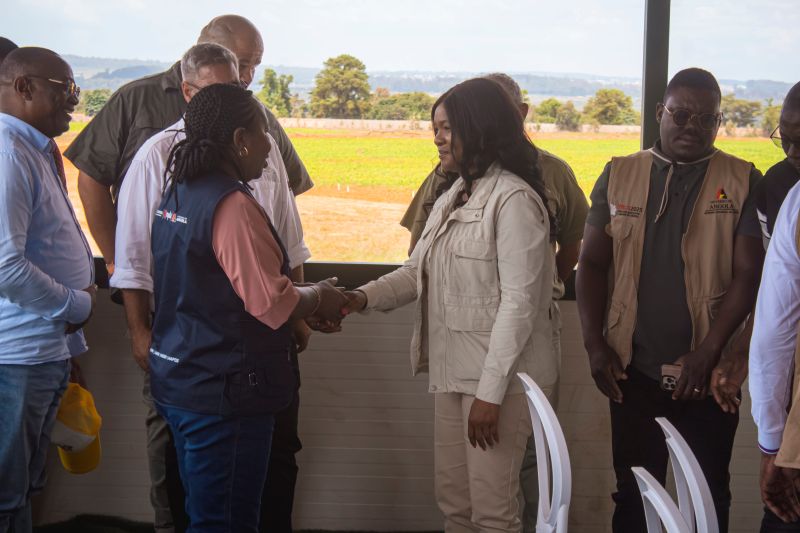
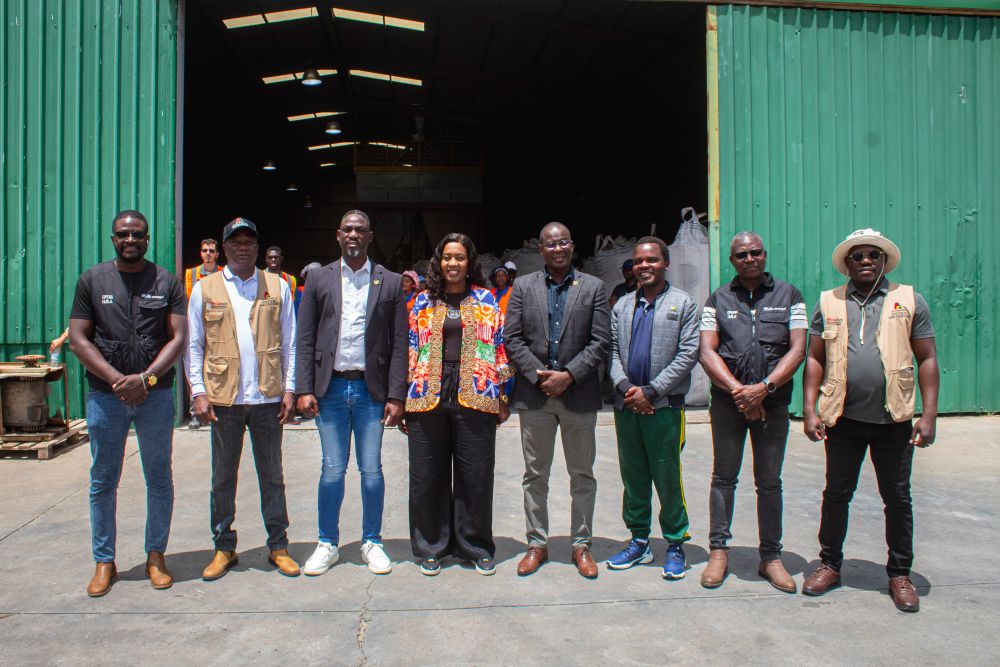
Visit of the Governors of Namibia
A concrete example of institutional and regional cooperation linked to agricultural development and the sharing of technical knowledge.
INSTITUTIONAL RELATIONS
Regional cooperation around agriculture
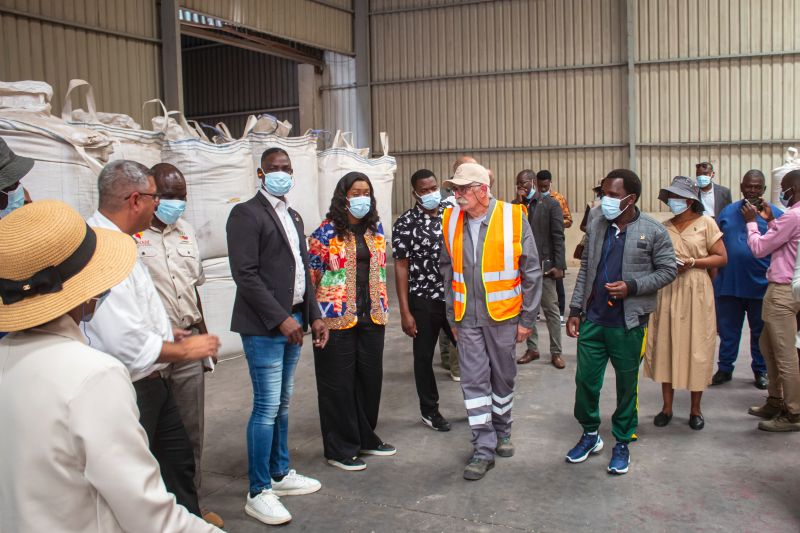
In early 2026, Jardins da Yoba hosted a delegation of Governors from the northern region of Namibia for an institutional visit to its production and processing units.
The visit provided an opportunity to showcase the company’s integrated model, which connects agricultural research, seed production, technology, processing, and territorial development.
More than just a formal visit, this event demonstrated the growing interest in structured agricultural solutions adapted to the realities of the territory and geared towards productivity, innovation, and food security.
January 2026
Regional cooperation
Angola · Namibia
COOPERATION NETWORK
Featured Partnerships
Institutions and entities that collaborate with Jardins da Yoba in scientific, technical, academic, and institutional areas.
PARTNERSHIP 01
IIA & National Seed Service
Agronomic Research Institute · Angola
Connection to the national agricultural reality
Cooperation with the Agronomic Research Institute and the National Seed Service ensures a direct link between Yoba Gardens’ work and the priorities of the national agricultural sector.
- Adaptation of varieties to the edaphoclimatic conditions of Angola;
- Local validation of agricultural technologies;
- Regulation, monitoring and validation of the Seed Production System;
- Alignment with the priorities of the national agricultural sector.
PARTNERSHIP 02
CIMMYT
International Maize and Wheat Breeding Center
Access to global innovation
The partnership with the International Maize and Wheat Improvement Center allows Jardins da Yoba access to internationally recognized knowledge, germplasm, and technologies.
- Access to improved maize and wheat germplasm;
- Introduction of advanced production technologies;
- Development of more productive and resilient agricultural systems.
This partnership connects Angola to international best practices in improving strategic crops.
PARTNERSHIP 03
UFLA
Federal University of Lavras · Brazil
Tropical technologies and human capital development
The partnership with UFLA reinforces the scientific and educational component of Jardins da Yoba, focusing on plant genetics, seed production, and tropical crops.
- Access to improved germplasm of rice and other cultivars, with emphasis on the Better Rice Angola Program;
- Advanced technical training in genetics and seed production;
- Academic training of national professionals through master’s scholarships;
- Transfer of applied scientific knowledge.
Currently, technicians from Jardins da Yoba are pursuing master’s level studies in Plant Genetics at UFLA, with scholarships from the cooperation project, reinforcing the company’s scientific base.
OUR PARTNERS
Who we work with
A broad network of institutional, technical, financial, academic, and business partners.
Scientific and academic cooperation
IIA
Agronomic Research Institute · Angola
UFLA
Federal University of Lavras · Brazil
CIMMYT
International Maize and Wheat Breeding Center
Mandume University
Mandume ya Ndemufayo University · Angola
EMBRAPA
Brazilian Agricultural Research Corporation
Ondjyla Foundation
Cooperation, research and development
Technical and regulatory cooperation
National Seed Service
Monitoring and validation of the seed production system.
IDA
Institute for Agricultural Development · Angola
SEINA
Cooperation in the national seed system
AIPEX
Angola’s Private Investment and Export Promotion Agency
BDA
Development Bank of Angola
FGC
Institutional and financial cooperation
Sectoral and business cooperation
AAPA
Sectoral association · Angola
APROFAGRO
Cooperation in the agricultural sector
Seiva
Technical and operational partner
Rainbow
Strategic partner
Angata
Strategic partner
SOF Visão
Strategic partner
IMPACT
Results of cooperation
Based on this cooperation model, Jardins da Yoba contributes to a more modern, productive, and sustainable Angolan agricultural system.
National phytogenetic reserve
Establishment of a plant genetic reserve and a National Catalogue of Varieties.
Seed quality
Improving the quality of seeds produced in Angola.
Agricultural productivity
Increased agricultural productivity in strategic crops.
Qualified staff
Training a new generation of qualified technicians.
Sustainable system
Development of a more modern and sustainable agricultural system.
WHY JY
Five reasons to become our partner.
01
Seed experts
Jardins da Yoba operates in the development, production and processing of seeds, focusing on quality, local adaptation and productivity.
02
Strong presence in strategic cultures
The company works with crops that are relevant to food security and agricultural development, including corn, beans, sorghum, millet, wheat, rice, and soybeans.
03
Integrated performance model
We connect research, production, processing, training, and proximity to producers, creating a more structured value chain.
04
Innovation applied to the field
We promote the use of technical knowledge, agricultural technologies, and genetic improvement in partnership with national and international institutions.
05
Sustainable and consistent growth
Our vision for growth is linked to investment in production capacity, R&D, human development, and territorial impact.
RESOURCES FOR PARTNERS
Information for Partners
Institutional documentation is available for partners, investors, and entities cooperating with Jardins da Yoba.
Institutional documents
Documents and institutional information available to partners, investors, and entities cooperating with Yoba Gardens.
RELATED PAGES
Sustainability and Governance
Partnerships are also connected to how the company manages resources, structures processes, and builds trusting relationships.
Sustainability
The cooperation reinforces more responsible agricultural practices, linked to efficient resource management, sustainable productivity, and territorial development.
Corporate Governance
Institutional, technical, and financial partnerships are part of a management vision based on transparency, accountability, and structured growth.
Suggestions for cooperation
Do you have a suggestion for cooperation?
Jardins da Yoba is open to suggestions for institutional, technical, scientific, academic, and strategic cooperation with entities that share a commitment to the agricultural development of Angola.
Discover More
Research, Development & Innovation
Research, testing and improvement of varieties.
Read More
Certifications
Certifications, awards, institutional recognition, and contribution to the sector.
Read More
Careers
Opportunities and human capital development.
Read More